Tuesday, 21 June 2016

Aperture And Shutter Speed

Aperture And Shutter Speed

This task was to experiment and play around with the settings on our cameras in order to see what type of images we could compose and create. I really enjoyed this task as it not only allowed me to become more familiar with my camera, it made me understand how my photos could be enhanced by a small alteration in setting and a completely different effect could then be accomplished.  


Artists Photography - Shutter Speed
This image uses a relatively slow shutter speed, you can tell this by the lights featured on the cars are blurred and also the cars are not shown in the image at all. I found this produced a really dramatic effect giving a river of light snaking through the whole photograph.  The street lighting creates lovely starburst of light to further enhance this and overall the image is highly eyecatching and dramatic. I like how this image almost looks abstract, however, we are reminded that the subject is real by the incorporation of the green foliage in the foreground.  

This image above has been taken again by slowing down the shutter speed and I loved the way that altering the length of time the shutter rei9ned open allowed a completely different vision of the water be portrayed.  I loved the soft feel of the photograph and could really get a feel for the motion of the waterfall.  This photograph also appealed due to the enhancement of colour which has been used.  The vivid green colours used really help to concentrate the viewers eyes to the flowing water.

The above final image was taken looking out over water at a firework display in the USA.  I found this image very striking and loved the way that the city skyline had also been captured together with the enormous firework which bursts above the water.  The photographer has framed this shot perfectly.  The firework casts a pink hue over the water which I found particularly pleasing and the light of the city buildings give more interest to the image.  I think that a huge amount of skill has been used in this photograph to enable to firework to be so clear and sharp, but also allowing the buildings on the horizon to be a big part of the overall effect.  


My Own Photographs
Experimental Images
I created this image using a very fast shutter speed, this was needed in order to catch the falling drops and suspend them in mid air.  I also used a relatively low aperture so that the subject of the image would be primarily based on the spoon and falling droplets rather than any distractions being provided by background.  Overall I was pleased with this first experiment with shutter speed, I liked the reflection created by the spoon and the glass and felt that this enhanced the shot. I decided that using a dark liquid would also draw the viewers eyes to the droplets rather than using water and I think that this worked successfully.

After my initial experiment with fast shutter speeds, I decided to then experiment by slowing the shutter speed downThe above image, taken of Teasel, my dog, shows the effect when the shutter has been left open for longer than normal. Unfortunately, she was not the most photogenic subject as she kept moving which is why the subject is blurry.  I began to understand that any movement which has taken place whilst the shutter has been open will result in a blurred, often overexposed shot.  I think the above image shows that too much light was let into the camera and a faster shutter on this type of subject would produce a much better image.


Final Images 

Based on my experimentation shots above, and my knowledge gained regarding shutter speed and light, I decided to try and photograph a firework display as the contrast between the fireworks and the dark sky should produce a pleasing image.  I began by setting my camera on a tripod as I knew that any movement would hinder my progress.  I then set my shutter speed to 5 seconds. I thought that if the shutter was left open too long, I would end up with trails of light similar to the car headlights which I did not want in this instance.  I did, however, need enough light to enter the camera to enable the full glory of the fireworks to be displayed.  I set my ISO to 100 for this shot and did not use a flash and was very pleased with the resulting images taken so continued to use the same setting for all my photos.  The main issue I found was actually managing to frame the firework in the centre of the shot, or take the photo when it was fully bursting. The photo above, I thought, was the most dramatic and well composed shot which I had taken and I preferred the burst pattern in this image compared to my other attempts.


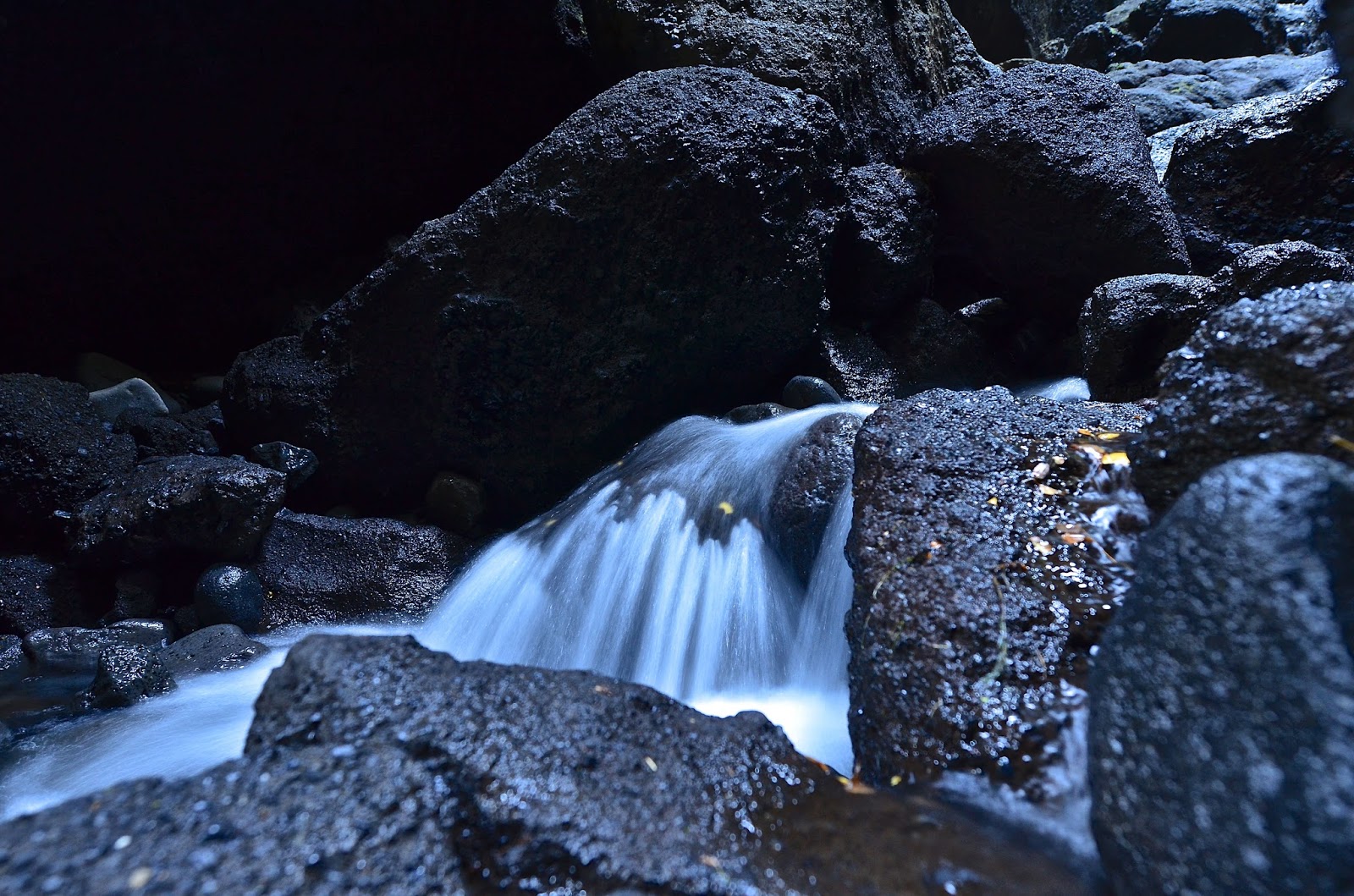
The above final image was taken at a waterfall in Iceland which was sheltered in a steep gorge.  Again using my research knowledge I decided to balance the camera on a rock for stability and remotely trigger the shutter.  This technique allowed me to get substantially closer to the subject and I think helped a lot with capturing the wet rocks surronding the waterfall. Being lower to the ground, the scale of the waterfall is able to be disguised.  Actually, this was only a very small waterfall, however, by positioning the camera low to the ground, it gives the effect that the falls are large.  As there was no camera wobble, I was able to leave the shutter open for this shot for quite a long time - approx 20 seconds and I think this enabled me to get a lovely soft flow of water which I was particularly pleased with.  I also liked the fact that the black rock showed the flow of water off perfectly and nothing distracted you from the image's subject.
Contact sheets


Artist Photography - Aperture
This Image was taken by an artist called Emily Moore, The aperture is once again F/1.8,  with this photograph being taken with a low aperture it creates a blurred background of the other sunflowers, but then it allows just one to be in focus.

This image also has a lows aperture which has been shown by the very blurred back ground which surrounds the leaf. with this image i love how the subject of the image is a singular leaf, this has been done on purpose to draw the eye to the main subject. 


My own Photographs
This image has been taken during a moderately low aperture, this is shown by the background being out of focus, but you can still see the things featured in the background. I also liked how Teasel was not looking directly at the camera, which makes the audience wonder what had caught her eye. 


This image has been captured using an even lower aperture, I set it to F/1.8 to make sure the background was almost completely blurred, and like a block colour.
I decided to photograph this image like this because i loved how the image is so dramatic, because of her piercing eyes once again looking at a something other than the camera.


Contact Sheets

Artist Research - Ellie Davies

Artist Research Task
Ellie Davies


For this task we were asked to research into ONE artist and create a blog post that contains at least 3 images from our chosen artist before analysing each image. 
All of the following images have been taken by the young British photographer Ellie Davies and are highly artistic in approach, mainly due to her previous studies as an art studentI enjoyed her visual approach to landscape photography enormously and found her use of light and additional media gave her photos unique interest. Ellie Davies spent 7 years photographing British forests and her resulting photographs are unique in her portrayal of the British countryside.  She uses Photoshop to enhance her images which I found highly effective and her use of light within her photographs made them very appealing to me. 

Ellie states "Over thousands of years, Britain’s forests have been shaped by human processes and represent the confluence of nature and culture, of natural landscape and human activity." 

This perspective fits perfectly within my theme of Man & Nature and I found exploring her images gave me a new direction for my Topic of study.


Artist Images

Ellie's first image above, taken from her exhibition named "Into The Woods", is a beautiful shot full of enchantment.  The photograph is taken within a natural woodland setting but is enhanced greatly by the winding path of painted leaves that snake through the whole frame. This technique takes us on a journey through the photograph and gives the shot a surreal feel which I really liked.  The use of colour here is so deliberate by the artist but I think the use of a completely foreign colour to this setting enables a dramatic edge to be given to the photograph and takes us away from reality for an instance. All other colour within the photograph is as we would expect, the browns of the tree trunks and fallen leaves together with the vivid green of the ferns, however, this dark, majestic blue does not belong which gives us the impression of mystery and myth. I really enjoyed this photograph and can see it's appeal to all generations as portrays the landscape in a very simple, yet intriguing way.

Once again the photograph above by Ellie Davies concentrates on a simple woodland setting.  However, for this image she has used light rather than colour to attract our attention to a certain area of her photo. Ellie's deliberate use of a pool of light immediately draws the viewers eye to this central illuminated area and again almost creates an enchanted feel to the image.  The mossy tree roots are highlighted and the shaded areas almost become more mystical due to this central area becoming lit.  The photograph would be at home in any fairytale and I think Ellie creates a lovely soft feel to the photograph with a very simple technique.


 In the above third image, again taken from "Into The Woods", Ellie once again uses a bold colour to engage with the viewer.  In this instance the focus is given to the central, golden tree which takes prime position shimmering within the darkness of the frame. Light again is used to create a dramatic effect within this photo and I loved the overall atmosphere that Ellie creates with this image.
Once again, although the tree obviously belongs in the woodland setting, it is painted a colour which is alien to this environment.  This immediately draws all our attention to this object and provides a very clear focal point for the shot.
The golden tree is deliberately much smaller than the tree trunks which surround it creating a good perception of scale within the photograph.  Again, I really liked Ellie's technique and found myself thinking about the landscape that surrounds me and how I could perhaps portray my local woodland in an unusual, fascinating way.


A further image which I enjoyed was the above photograph which had a fantastic composition.  The tree's trunk is almost directly central to the whole photograph and we are left with no doubt as to where are focus should be aimed.  Ellie's clever use of positioning of the tree is further enhanced by the smoke which shrouds the lower branches.  This again fits with her theme of enchantment, however, this time a more gloomy and almost threatening mood overrides the photograph.  Isolation becomes apparent and gives the forest an air of mystery which is not altogether comfortable.


My final photograph which I particularly admired was the above shot, which is taken from Ellie's more recent exhibition "Stars".  This time Ellie combines the landscape of the forest and overlays her own image with a photograph of a constellation of stars taken by the Hubble Telescope.  This technique creates a wondrously magical feel to the photographI admired once again, Ellie's dramatic use of light as the lit trunks of the trees frame the shot perfectly and do not impose on the circle of stars in the background.  Fantasy is a rhetorical theme in Ellie's work and this photograph certainly fits with this idea.  The lit forest floor is almost balancing the dark circle of stars, defying gravity, whilst the trees encircle it from each side.  I really liked this composition and found the effect eye catching and memorable.


Inspired by Ellie's work, I decided to try and replicate her technique of light pools and composition by photographing landscape using torchlight.  I was impressed by some of the results which were both exciting and sometimes highly dramatic.  The light picked up the shape of the branches perfectly, however, it was difficult to get a sharp image.  Above is my favourite image which I took using a white beam from a head torch.  This I felt leaned more towards Ellie's theme of fantasy and I liked the effect of shadows which were highlighted when using such a narrow beam of light.

Again using torchlight, but this time on a much wider beam, I took the above image of foliage.  I liked the way within this image, that the bead of dew is highlighted and is sharp within the centre of the shot.  The torchlight almost creates a tunnel effect and frames the shot with a lovely dark ring which I again found very appealing. The clean lines of the blades of grass also contrast nicely with the curved edges of the oak leaves giving the image further interest.


Contact Sheets

Emulation - Anthony Roach

Emulation - Anthony Roach

The artist whom I have chosen to study for this task is called Anthony Roach, who is a professional photographer specialising in landscape photography. Roach is an Australian photographer who became interested in landscape photography due to living in close proximity to the sea.  His seascape images are breathtaking and often portray the morning's first light over water, the incredible lines of the landscape when the sea washes over the beach and the the uniqueness of the ecosystems surrounding the sea shore. His photographs are highly appealing, often very detailed and highly colourful with specific attention paid to the movement of the water and the details in the surrounding landscape.


Artist's Photographs
The above photograph is also the image which I have chosen to research in more detail. This was my favourite photograph out of all three images studied, due to the inclusion of a highly dramatic sky.  I loved how isolated the singular house is to the left of the photograph which also assisted the viewer to realise the sheer scale of the mountains in the background. Slowing the shutter speed on this shot allows us to gain a perfect impression of the shallow stream tumbling over the pebbles and we are almost able to image the sound of the water as it passes in the foreground.  Colour plays an important role within this image and I love the way that Roach enhances the green of the grass and the beautiful pink tone of the sky to create a very interesting image.  The light protruding through the clouds is pleasing to the eye and keeping the mountains in the background darker helps us focus our attention towards the house and the river.

The above image, also taken by Roach is completely different in subject and altogether much brighter that the previous shot.  As this is a beach setting, Roach uses a more tropical palate of colours and these are very much suited to the subject of the photograph.  Although a totally different scene, Roach still uses similar techniques within this image and again colour is vitally important.  I love the composition of this photograph with the rainbow ending in the very centre of the image.  Roach has again enhanced the colours and this makes the beach and sky very appealing for the viewer. Again the background mountains assist in making the focus of the photograph the rainbow and the lush vegetation is a good contrast to it's bands of colour allowing us to see the faint second rainbow a little clearer.


My final artist image features a rather dramatic sky, which looks like it has been slightly edited on photoshop to ensure there is high cloud definition. I like this overall effect and although the colours are not as vivid as previous photographs, the sky's pink tinge is pretty giving the impression the photograph was taken either early in the day or at sunset.
Due to this light, the rocks shimmer and frame the photograph nicely.  I think the wide angle used to take this image gives the photo more drama and shows the vast coastline trailing off into the background which I liked.


My Artist Image Copy (SKETCH)


This is the sketch of my chosen artist photograph, when sketching this image I began to realise that there were lots of harsh lines within the photograph which had almost been softened by the photographer by using colour and a slower shutter speed. By producing a sketch I was able to understand his composition even more and gave me inspiration as to how I could perhaps frame my own photographs better and take more interesting views by using a wider angled lens. The landscape almost grew in scale and I liked this different perspective.  I decided to try this technique in my own images and to concentrate on colour and composition to try and produce my own epic shot. 


My Final Inspired Images


This is one of my final images which i took (inspired by my artist, Anthony Roach) Within his first image he uses a slow shutter speed to enhance water movement and to create an almost blurred effect to the river indicating speed. This is the feature which i have tried to replicate in my own image and I, like Roach, slowed my shutter speed to illustrate the water rushing over the rocks, as well as a high colour contrast. I also used a wider angled lens to try and fill the shot with the waterfall.  I think that this enhances the photograph further and makes the waterfall look more powerful.  Like roach, I also enhanced the colour of the sky in this image, to try and create further interest and concentrate the viewer's focal point to the rushing water.  I tried many vantage points when capturing these falls, however, this was my favourite position as when I lowered myself slightly nearer the ground, the width of the waterfall was greatly enhanced and filled the shot.


The image above was taken in a layby whilst in Scotland, I was initially drawn to the tall Scots pine trees which towered above the rest of the scenery and liked the way they broke up the sky.  Using Roach's technique of composition as inspiration, I tried to get as much of the landscape in the photograph as possible and found that my wide angle lens almost allowed the scenery to wrap around me. From this vantage point in the layby you were able to see far into the distance without actually being too elevated which I liked.  The scenery was varied too which meant that there were many elements to the photograph, however, the bright sunlight was difficult to work with and created glare with such a wide lens. I took some photos when the sun went behind a cloud, but these were dull and were not vibrant enough so continued with the sunlight and used Photoshop to alter the contrast int he sky and to enhance the colours to match Roach's images.
Contact Sheets

Landscape Introduction

Landscape Introduction 

This is my introduction page to the theme of "Landscape" which is the underlying subject of many photographs within my topic Man & Nature. This page will feature three initial starter images shot by myself, an inspirational mind map and also a snippet of my Pinterest board which I created whilst exploring this theme.

Above is a snapshot of my Pinterest board which is where I will be displaying all of my images collected as inspiration throughout the course. I found that Pinterest was a great way to explore a theme as it displays a visual journey of a topic and allows thought processes to be clearly displayed. I found Pinterest an interesting simple way to compare different styles of photography and this enabled me to also discover new images which I may not have come across searching the internet alone.  


Following on from my Pinterest board, I used a mindmap to categorise my findings which assisted in ensuring all parts of the theme were explored thoroughly. Above is my first Mind map showing some of my opening ideas and a few of the Artists whose work i will be investigating over the next few weeks. There were certain aspects of my mind map that I decided not to consider, as over time, my investigations stemmed to new more concentrated ideas.  I found the mind map a great way to plan my work and gave my research structure.

After initially using the internet to gain some inspiration, and being a novice within the field of landscape photography, I decided to experiment and take some opening images of my own to gain some insight into possible compositions.  Very quickly I realised that the landscape around me made for some incredible images and whilst both home and abroad, I began to see the potential of the natural world and how I could capture it's beauty with my camera.


My Own Photographs
Icelandic waterfall - November 2015, This photograph was taken at Skógafoss Waterfall in the South of Iceland during a short trip in 2015 and at the very beginning of my course.  I tried to portray the sheer magnitude of the falls and how powerful the water was tumbling over the mountainside. I spent time at this location experimenting with how to express the size of the waterfall through my lens.  This was done by initially placing people within my shot to attempt to demonstrate scale and then by lowering myself to ground level to emphasise the height of the falls.
I also experimented with colour in this photograph and used Photoshop to enhance the green tufts of grass.  I liked the effect given as it was a sharp contrast to the grey pebbles and sand on the floor which gave my shot appeal and interest. 


This image has not been edited in Photoshop because i felt that the contrasting colours brought out the landscape well on their own. Again the image was taken on Iceland's South coast, however, this time, I tried to demonstrate the power of the ocean by capturing waves crashing over the jagged Icelandic rocks.  The almost Monochrome colouring of this image was appealing to me as it enhanced the sea spray and gave the sea a more angry mood. I experimented with taking images of particular waves, however, the coastline in the above image seemed to frame the shot more and give the viewer a better perspective of the horizon and I think this added to the drama of the photograph. I will experiment further with colour later in my course to see if any techniques could furthermore improve my landscape images.


The above final image, again taken in Iceland experiments with texture and also placing a subject within the photograph.  There are many elements to this photograph which I particularly liked and wished to experiment further during my course.  Firstly, I decided to test using different colours and textures within my photographs and the contrasts which could be made. The soft, almost fluffy yellow sea grass contrasts really well with the sharp mountains in the background and also the clean lines of the black church which I found very appealing. I secondly tested new angles from which to take my images and I found that slightly creating an angle, enhanced the direction in which the girl was walking, and therefore, focusing the viewers attention towards the church.
Lastly, I began to realise that the sky in an image can be just as interesting as the landscape and in some cases can create real drama within a shot. I liked the cloud formations in the above shot which enhanced the mood of the photograph and the blue hue of the sky again contrasted well with the grass in the foreground.  I will look more closely at the role of skies within my photography as the course progresses.  


Contact Sheets